Yes — Amazon allows AI-generated and AI-assisted books on Kindle Direct Publishing (KDP) as of 2026. That's the short answer to the most common version of this question. The longer, more useful answer is about what “allowed” actually requires, because the rules have specific teeth.
What Amazon actually requires
Since 2023, KDP has required publishers to disclose AI involvement in the content submission process — not necessarily on the book's cover or product page, but in the publishing dashboard itself. Amazon distinguishes between two categories:
- AI-generated: text, images, or translations created entirely by an AI tool with minimal human editing.
- AI-assisted: you used AI as part of the process — brainstorming, drafting, editing — but the final content reflects substantial human creative control.
Most successful AI-assisted authors land in the second category: AI drafts, a human edits, restructures, fact-checks, and adds anything AI can't — real experience, specific examples, a point of view.
What's genuinely not allowed
Amazon isn't policing AI use itself — it's policing the outcomes AI made cheaper to produce at scale: low-effort, repetitive, or misleading content flooding a category. Specifically prohibited:
- Books that copy or closely mimic another author's copyrighted work
- Reviews or content that misrepresent what's inside the book
- Mass-produced, near-duplicate books published in bulk to spam a category
- Undisclosed AI content in categories with separate rules, like some children's or educational content
Why the quality bar matters more than the policy
Here's the part most “how to publish AI books” content skips: even where AI content is fully allowed, most AI-dumped books still don't sell. The barrier was never really Amazon's policy — it's that a raw AI draft, published with no editing, reads like exactly what it is. Readers notice, leave low ratings, and Amazon's own algorithm deprioritizes low-engagement books regardless of how they were written.
The books that actually work treat AI as a first-draft generator, not a finished product — the same way you'd treat a human ghostwriter's rough draft.
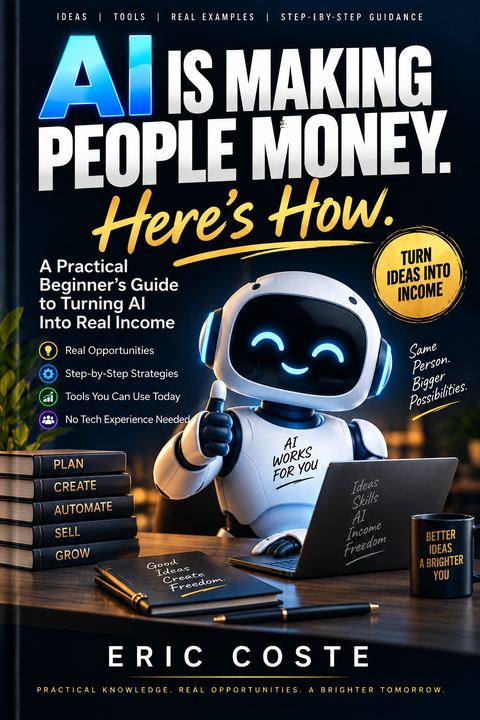
The real opportunity here isn't “AI writes a book, you publish it, you collect royalties.” It's using AI to compress the time between having knowledge and having a finished, sellable digital product — which is one of eight income models covered in AI Is Making People Money. Here's How., including the exact prompts for drafting a sample deliverable a buyer can actually judge before they pay.
FAQ
No — the disclosure happens in the KDP publishing dashboard during submission, not necessarily on the cover or product listing, though Amazon reserves the right to add a disclosure label to the product page in some cases.
Only for violating the actual rules — undisclosed AI content, copyright infringement, or spam publishing. Properly disclosed, edited AI-assisted books are explicitly allowed and common on the platform.
On average, no — because most AI-generated books skip the editing step that makes a book actually good. Well-edited AI-assisted books, in a specific niche, can perform comparably to traditionally written books in the same category.
AI-generated means minimal human editing of AI output. AI-assisted means AI helped with drafting or brainstorming but a human substantially shaped the final content. Most commercially successful AI-era books fall into the second category.