Most “how to create an AI book” guides are really just “how to generate text with AI” guides — which was never the hard part. The hard part is everything around the text: picking a topic specific enough to sell, editing the draft into something worth reading, and getting it in front of people who'd actually buy it. Here's the full process.
Step 1: Pick a narrow topic, not a broad one
“A book about AI” competes against thousands of other books about AI. “A book about using AI to write client proposals for freelance graphic designers” competes against almost nothing — and speaks directly to a reader who instantly knows it's for them.
Use this prompt to find your angle:
Act as a business strategist. I know a lot about {topic or skill}. List 10 specific, narrow problems people in that world complain about often — narrow enough that a book solving just one of them would feel obviously written for them.
Step 2: Outline before you draft anything
Have AI draft a chapter-by-chapter outline based on your narrow topic, then edit it yourself — cut anything generic, add anything only you'd know from direct experience. This is the first of several places where your judgment, not AI's output, decides whether the book is worth reading.
Step 3: Draft chapter by chapter, then actually edit
Draft each chapter with AI, one at a time — not the whole book in one prompt, which produces generic, repetitive text. Then do a real editing pass: restructure weak sections, cut filler, and add specific examples or stories AI can't invent because it doesn't have your experience. This step is the difference between a book that reads as “obviously AI” and one that doesn't.
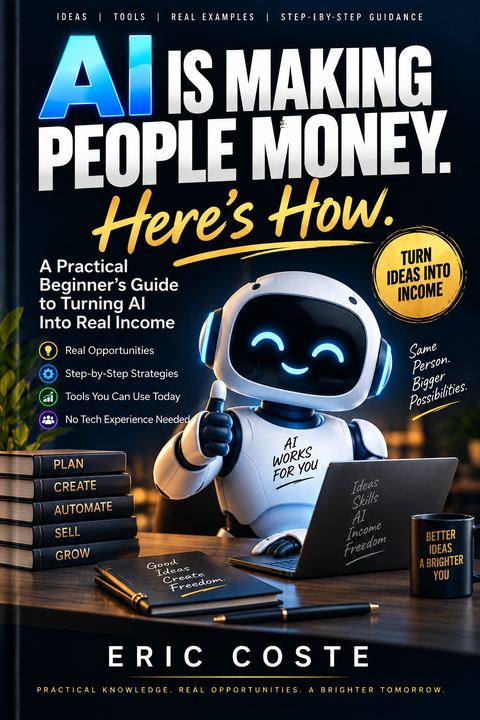
Step 4: Design a cover that doesn't look AI-generated
Readers judge a book by its cover before anything else, and a cheap-looking cover signals a cheap-looking book regardless of what's inside. Use a template tool (Canva, Book Brush) or hire a freelance cover designer for $50–150 — this is worth the spend even on a first book.
Step 5: Disclose AI use and publish
Amazon KDP requires disclosing AI involvement in the submission dashboard (see our full breakdown of Amazon's AI book rules for exactly what's required). Choose a specific category and a small number of accurate keywords — don't try to cast a wide net.
Step 6: The step almost everyone skips — the actual launch
Publishing and waiting for Amazon's algorithm to surface your book is the most common reason a genuinely good book makes almost nothing. Before you publish, or right after, reach out directly to 15–20 people who'd realistically want this specific book — not a general audience, the specific people your narrow topic is for. Ask for honest reviews. Early reviews and early sales velocity are what get a new book any algorithmic visibility at all.
This exact sequence — find the narrow opportunity, turn it into an offer, find the people who'd pay — is the same process the free 7-day email course walks through, applied to any AI income model, not just books.
FAQ
A focused first draft can take days rather than months, but budget real time for editing and cover design — those steps determine quality far more than drafting speed does.
No, but you do need enough knowledge of your chosen topic to edit AI's draft into something accurate and specific. The knowledge matters more than prior writing experience.
Publishing immediately after the AI draft, with no editing pass and no plan to reach real readers. Both steps matter more to whether the book sells than the drafting process itself.
Yes — the same find-a-narrow-problem, draft-with-AI, edit-for-quality, launch-to-real-people sequence applies to guides, templates, and other digital products, not just books.